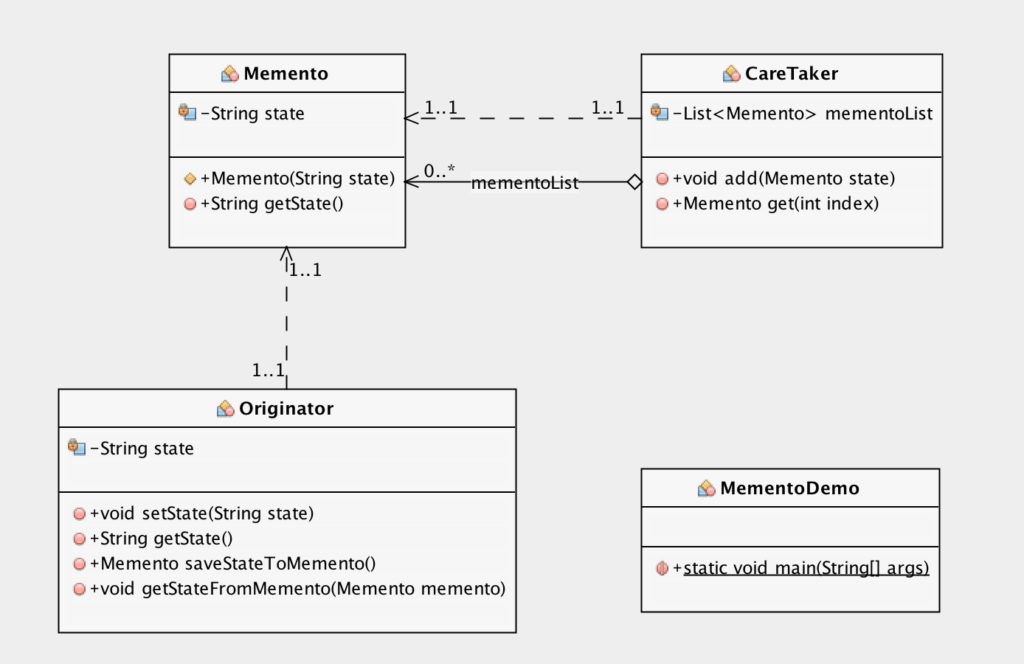
 Let's suppose if you are going to any function like a birthday party or marriage, you will buy some gift for that person. If that person sees that gift after five years, it could remind your presence for that function. So here the gift is acting as a memento.
  Let's consider a bank example. If your bank debits some amount mistakenly, you would call your bank and conveys your query. The bank checks your transaction and if the operation was done by mistake they bank would return you the debited amount. Here, the bank is rollbacking your transaction by changing the state to the previous state.
  Let's consider a technical example. We would have been using word editors like Microsoft Word. There is a feature called "undo". You can go to previous states by just clicking undo option.